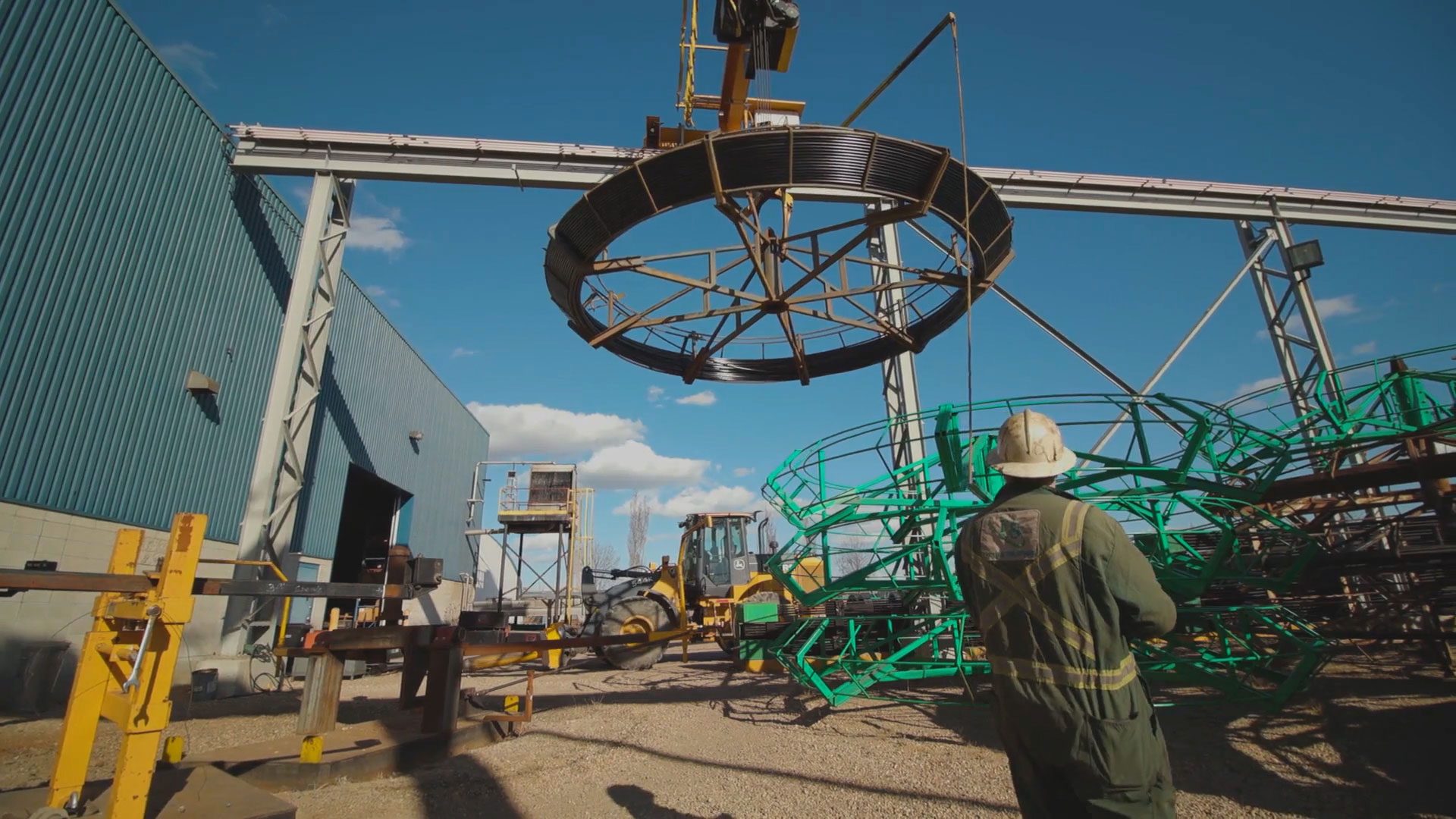
Coated Endless Rod CER Ethyflex
Project Information
| Location: | Provost, Alberta, Canada |
| LS Product: | 1″ Grade D Coated Endless Rod EthyFlex |
| Install Date: | November, 2020 |
Client Challenge
Accelerated rod string failures due to corrosive elements in the produced fluid resulted in a high workover frequency increasing lifting costs due to poor overall performance. Typically, rod string design for corrosive fluids involves improved metallurgy through engineering and selection of corrosive resistant alloys. Rod strings in non-corrosive applications are made from carbon steel. The addition of chromium, molybdenum, and nickel significantly improve the corrosion resistance of these alloy steel grades.
The presence of hydrogen sulfide (H2S), chlorides (salts) and carbon dioxide (CO2) are all contributing factors to the corrosion of downhole equipment containing steel. The pH/acidity of the raw fluid also needs to be considered due to the chemical reaction with hydrogen resulting in corrosion and embrittlement of the metal used in the wellbore. Corrosion from sulfate reducing bacteria introduced to the reservoir through various forms of fluid injection may also contribute to corrosion and surface embrittlement.
Client Goal
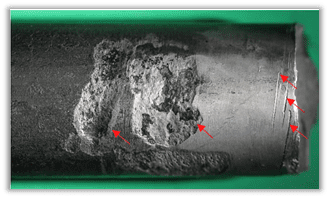
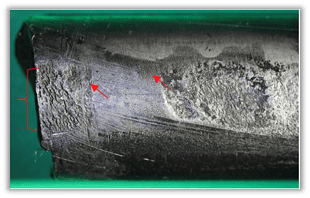
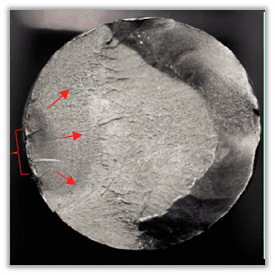
Historical rod string configuration resulted in frequent failures requiring costly workovers. The client company was looking for improvements to increase overall runtime. Corrosion (chemical) inhibition programs were costly resulting in the continuous use of costly downhole chemicals resulting in reduced economic feasibility of producing the well. Significant improvement to the pump configuration and rod string were needed to extend the mean time to failure. Several parted rod samples were sent to the Lifting Solutions materials lab in Edmonton for detailed inspection. Results of the inspection clarified the various factors and their contributions to the failure mode.
Our Solution
To address corrosion accelerated fatigue failures and reduce rod replacement frequency, a 1″ Grade D EthyFlex hybrid rod string was installed. The hybrid configuration incorporated coated rod below the kickoff point (KOP), with bare rod above KOP, creating a polymer barrier between the steel rod body and produced fluids in the critical downhole section.
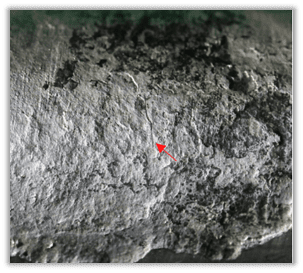
Localized corrosion pitting can act as stress concentrators, initiating cracks and accelerating fatigue propagation under cyclic axial and torsional loading. These effects can be amplified in deviated and horizontal wellbores, where the rod string is subjected to millions of operating cycles.
Failure analysis of the original rod string identified corrosion related pitting and elevated localized stresses. The EthyFlex coated rod was selected to reduce exposure of the steel rod body to corrosive and abrasive constituents while the coating remained intact.
Pump sizing was also optimized. Earlier attempts to extend rod life used an oversized pump operated at very low speed to reduce the number of rod bending cycles. However, the larger pump increased operating torque, offsetting the benefit of reduced cycling. In a corrosive environment, higher torque can accelerate crack initiation and fatigue propagation from existing corrosion pits and stress concentrations. Reducing the nominal pump size to better match well performance lowered operating torque and reduced the mechanical loading contributing to premature rod failure.
| Event | Rod String | Run Days | Rod Parts | Average Run Days Between Rod Jobs |
| NWC Rod String | 1-1/8” Continuous Rod | 388 | 2 | 194 |
| Rod Replacement | 1” Used Endless Rod | 46 | 1 | 46 |
| Rod Replacement | 1” EthyFlex Endless Rod (hybrid) | 1,933 | 5 | 387 |
Conclusion
The final rod history demonstrated a substantial increase in runtime following installation of the 1″ hybrid EthyFlex Endless Rod. Previous rod configurations achieved 388 and 46 days of service, respectively, while the EthyFlex coated rod operated for 1,933 days before being pulled and scrapped at the end of its service life.
The results demonstrate the importance of matching rod string technology and pump sizing to the specific well environment. In this application, the coated rod provided a barrier against corrosive produced fluids while the coating remained intact, contributing to a significant improvement in runtime compared with the historical rod configurations.
Let’s solve your lift challenges.
Reach out and Experience Performance with Lifting Solutions.